
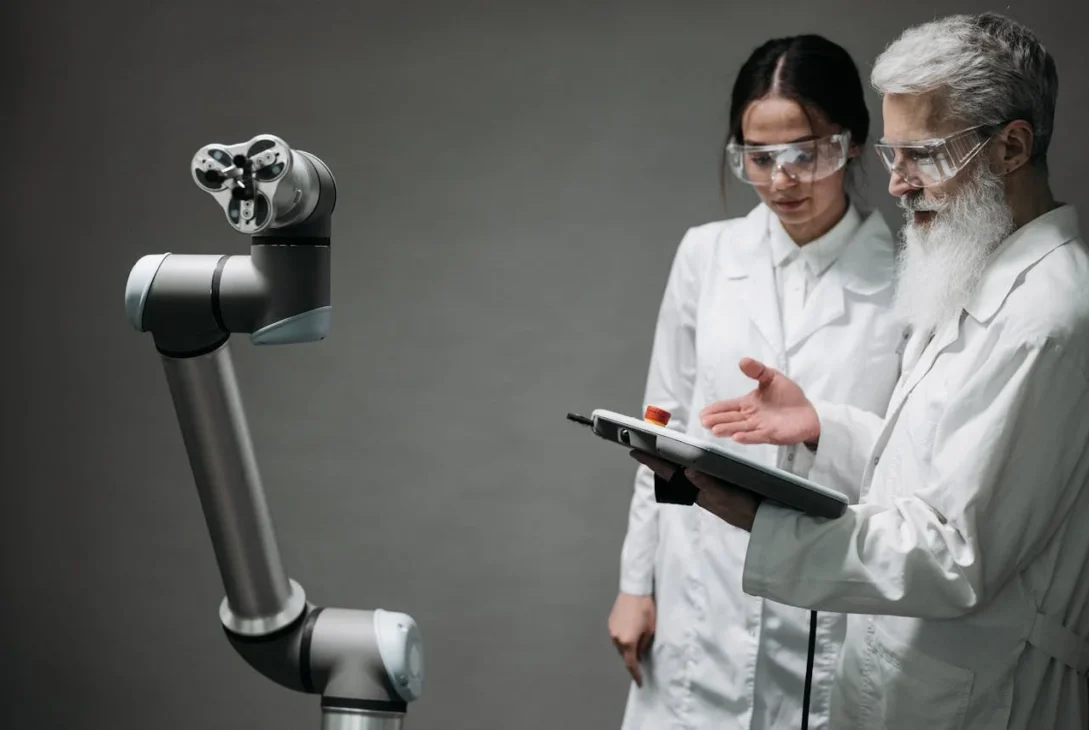
The AI era has transformed technology careers faster than any previous wave of innovation. New tools emerge constantly, job roles evolve overnight, and skills that were valuable yesterday can feel obsolete today. While access to information has never been greater, clarity, judgment, and direction have never been harder to find. This is why mentorship has become essential—not optional—for tech professionals.
In a world driven by algorithms, human guidance is the competitive advantage.
Information Is Abundant—Wisdom Is Not
AI can generate code, suggest architectures, and summarize best practices in seconds. What it cannot do is teach wisdom: knowing what matters, when to act, and what trade-offs to accept.
Mentors help tech professionals:
- Interpret information in real-world context
- Make decisions under uncertainty
- Avoid costly career and technical missteps
As tools multiply, discernment becomes the differentiator.
Navigating Constant Skill Disruption
AI is reshaping roles across engineering, data, product, and IT. Many professionals feel pressure to constantly upskill—often without knowing where to focus.
Mentors help by:
- Identifying which skills will compound long-term
- Separating hype-driven learning from strategic growth
- Creating realistic learning paths instead of reactive scrambling
Guidance prevents burnout and wasted effort.
From Technical Expert to Strategic Thinker
AI automates many technical tasks, shifting value toward systems thinking, leadership, and problem framing.
Mentors help tech professionals:
- Move beyond execution into strategy
- Understand business impact, not just technical correctness
- Communicate complex ideas to non-technical stakeholders
This evolution is critical for career longevity in the AI era.
Ethical Judgment in a High-Stakes Environment
AI introduces ethical questions around bias, privacy, accountability, and societal impact. These decisions are rarely black-and-white.
Experienced mentors provide:
- Perspective on ethical trade-offs
- Guidance grounded in real consequences
- A values-based approach to decision-making
AI can optimize—but humans must take responsibility.
Emotional Stability Amid Rapid Change
Constant disruption creates anxiety, impostor syndrome, and fear of being left behind.
Mentors offer:
- Reassurance grounded in experience
- Perspective during career transitions
- Confidence during periods of uncertainty
Emotional resilience is as important as technical skill—and mentorship strengthens it.
Avoiding Career Myopia
Without guidance, many tech professionals optimize for short-term roles, salaries, or tools—only to plateau later.
Mentors help widen perspective by:
- Encouraging long-term thinking
- Highlighting leadership and influence paths
- Helping professionals align careers with values and lifestyle goals
This prevents reactive career decisions driven by market noise.
Building Influence Beyond Code
As AI handles more execution, influence matters more than output.
Mentors teach tech professionals how to:
- Build credibility and trust
- Lead cross-functional teams
- Influence decisions without formal authority
These skills are rarely learned through documentation—but often learned through mentorship.
Learning What AI Cannot Teach
AI can explain how to do something. Mentors teach when not to.
They help professionals learn:
- When simplicity beats optimization
- When to slow down instead of scale
- When human judgment matters more than efficiency
These insights come from experience—not datasets.
Accountability and Growth Discipline
Self-directed growth is difficult in a fast-moving environment. Mentorship introduces accountability.
Mentors:
- Help set realistic goals
- Encourage consistency over intensity
- Prevent stagnation during comfortable phases
Growth becomes intentional rather than reactive.
Mentorship Future-Proofs Tech Careers
The most resilient tech professionals aren’t those who master one tool—they’re those who learn how to adapt.
Mentorship builds:
- Decision-making confidence
- Strategic thinking
- Emotional intelligence
- Ethical clarity
These traits endure long after tools change.
Final Thoughts
In the AI era, technology moves fast—but careers are built slowly. Mentors help tech professionals slow down enough to think clearly, choose wisely, and grow sustainably.
AI may write code, analyze data, and automate workflows—but mentors shape judgment, character, and direction. And in a future defined by intelligence, those human qualities matter more than ever.






 Mentor Times — Inspiring Growth, Leadership & Modern Mentorship.